4903 S Beck Rd, Suite 1, Canton, MI 48188

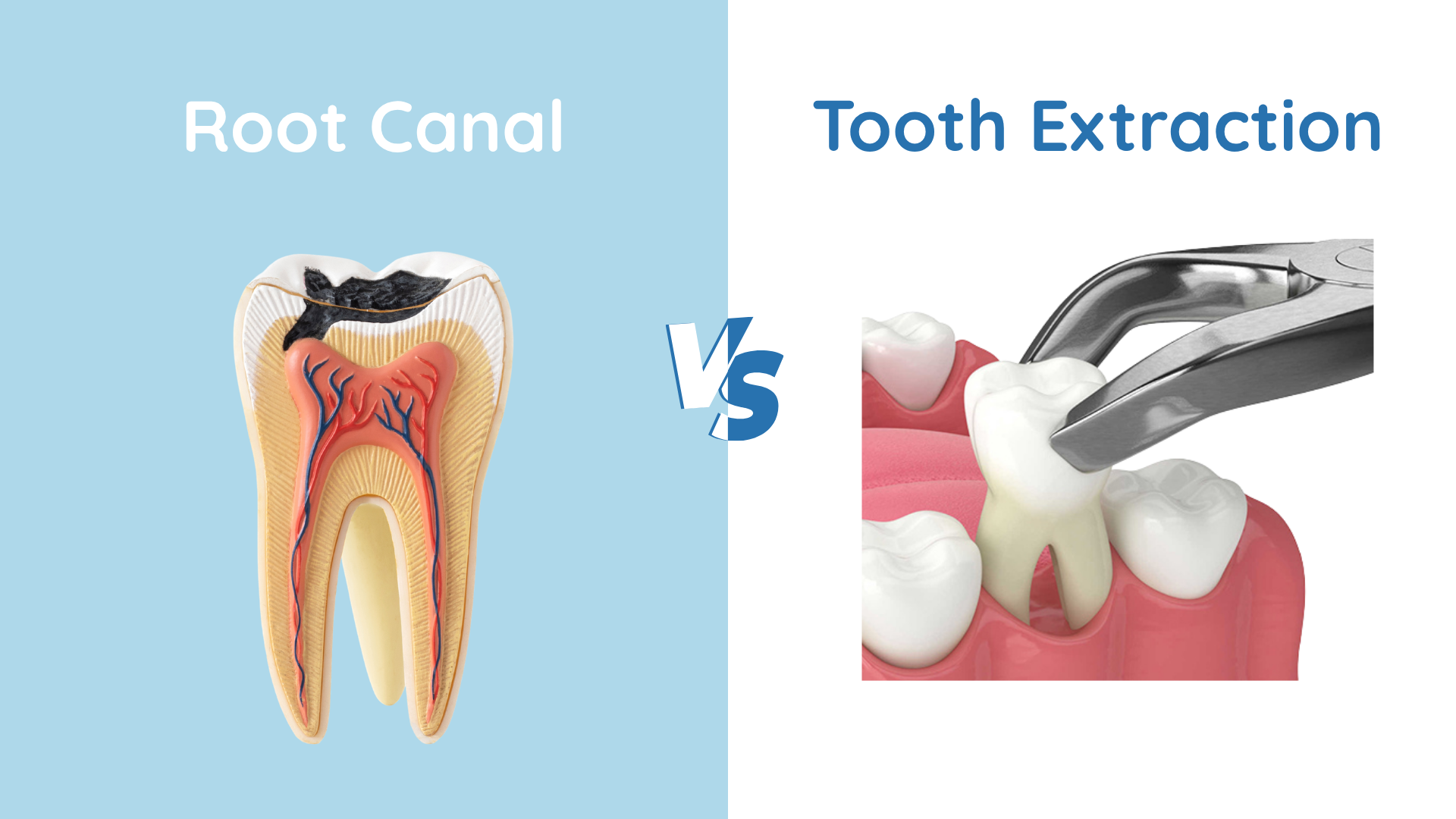
A painful, damaged, or infected tooth can leave you wondering whether it can still be saved. When treatment options come down to Root Canal vs. Tooth Extraction, the right choice depends on the condition of the tooth, the extent of the damage, and whether it can be restored predictably. At Canton Healthy Smiles in Canton, MI, root canal therapy is used to treat infected or damaged tooth pulp and help preserve the natural tooth, while extraction is considered when a tooth is too damaged, decayed, infected, or otherwise unsuitable for restoration.
The important point is that tooth pain does not automatically mean a tooth needs to be removed. A dental evaluation can help determine what is actually happening and which treatment is appropriate.
Root Canal vs. Tooth Extraction: What Is the Difference?
A root canal treats the inside of a damaged or infected tooth. The procedure removes infected pulp, cleans and disinfects the inside of the tooth, fills the space with a biocompatible material, and seals it. In many cases, a crown is recommended afterward to restore the tooth’s strength and appearance.
A tooth extraction, on the other hand, removes the entire tooth when it cannot be predictably restored or when removal is considered the healthier option.
At Canton Healthy Smiles, preserving natural teeth is a priority whenever possible. However, extraction may be appropriate for teeth affected by severe decay, significant fractures, advanced periodontal disease, or an infection that cannot be treated with root canal therapy.
When Can a Root Canal Save a Tooth?
Root canal therapy may be considered when the tooth’s pulp—the soft tissue containing nerves and blood vessels—has become infected or damaged.
According to Canton Healthy Smiles, possible warning signs include:
- Persistent or severe tooth pain
- Pain when biting or chewing
- Prolonged sensitivity to hot or cold
- Swelling or tenderness around the tooth
- Darkening or discoloration of the tooth
These symptoms can indicate a problem that needs professional evaluation. They do not, by themselves, determine whether a root canal or extraction is necessary.
Deep decay, cracks, or injury can damage the pulp. When the affected tooth can still be treated and restored, root canal therapy can remove the infected pulp while allowing the natural tooth to remain in place.
For patients experiencing these symptoms, root canal therapy in Canton, MI may be an option worth discussing with a dentist.
When Is Tooth Extraction Necessary?
Tooth extraction may be recommended when a tooth cannot be repaired or restored predictably.
Canton Healthy Smiles identifies several situations in which extraction may be necessary, including:
- Severe tooth decay that cannot be treated successfully with a filling or root canal
- A broken or fractured tooth that is damaged beyond repair
- Advanced periodontal disease that has compromised the tooth’s supporting structures
- A dental infection that cannot be treated with root canal therapy
- Certain impacted wisdom teeth
Extraction is therefore not simply an alternative chosen because a patient has tooth pain. The condition of the tooth and surrounding structures matters.
In some cases, removing a severely compromised tooth may help protect overall oral health. Your dentist can explain whether extraction is appropriate and what options may be available afterward.
How Does a Dentist Decide Between a Root Canal and Extraction?
The decision should be based on an individual examination rather than symptoms alone.
Your dentist will evaluate the affected tooth and determine whether it can be treated and restored. The underlying cause of the problem also matters. For example, tooth pain may be associated with deep decay, a damaged pulp, a fracture, or another dental condition.
This is why trying to decide between a root canal and extraction at home can be misleading.
A useful way to think about the decision is:
If the tooth can be predictably treated and restored: root canal therapy may allow the natural tooth to remain.
If the tooth is too severely damaged or cannot be predictably restored: extraction may be recommended.
The goal is not simply to eliminate pain. The goal is to address the underlying dental problem while considering the long-term health and function of your smile.
What Happens During Root Canal Therapy?
At Canton Healthy Smiles, root canal treatment begins by numbing the area with local anesthesia. A dental dam is placed around the tooth to keep the treatment area clean and dry.
The infected pulp is then removed, and the inside of the tooth is cleaned and disinfected. The space is filled with a biocompatible material and sealed.
A crown is recommended in most cases afterward to help restore the tooth’s strength and appearance.
Canton Healthy Smiles notes that root canal treatment can typically be completed in one or two appointments, with appointments lasting approximately 60 to 90 minutes. Mild soreness afterward can occur and is generally temporary.
What Happens During a Tooth Extraction?
Tooth extraction also begins with local anesthesia to numb the area. The tooth is carefully loosened and removed. More complex cases may require surgical techniques.
Stitches may be needed depending on the extraction, and your dental team will provide aftercare instructions to support healing.
Canton Healthy Smiles notes that mild swelling or soreness can occur after an extraction and that the extraction site continues healing after the initial recovery period.
Following the recommended aftercare instructions is important for proper healing.
Is a Root Canal Better Than an Extraction?
There is no single treatment that is appropriate for every tooth.
When a tooth can be predictably treated and restored, root canal therapy provides a way to address infection while preserving the natural tooth. When a tooth is too damaged, severely decayed, or otherwise unsuitable for restoration, extraction may be recommended instead.
That distinction is important because choosing extraction simply to avoid root canal treatment may not address the broader consequences of losing a tooth. The appropriate treatment depends on the specific condition of your tooth and your dentist’s evaluation.
If extraction is necessary, your dentist can also discuss the next steps for maintaining oral function and replacing the missing tooth when appropriate.
What If You Are Experiencing Tooth Pain?
Do not rely on pain level alone to determine how serious a dental problem is.
Persistent tooth pain, pain while chewing, prolonged hot or cold sensitivity, swelling, tenderness, or tooth discoloration can all be reasons to schedule a dental evaluation.
Visit Canton Healthy Smiles we can also provide emergency dental care for sudden tooth pain and other urgent dental concerns. Prompt evaluation can help identify the cause of the problem and determine whether treatment such as a filling, root canal, or extraction is appropriate.
For patients in Canton, MI, getting an evaluation can provide a clearer answer than trying to choose between treatments based on symptoms alone.
The Bottom Line
When comparing Root Canal vs. Tooth Extraction, the key question is whether the affected tooth can be treated and restored predictably.
Root canal therapy removes infected or damaged pulp, cleans and seals the inside of the tooth, and can help preserve the natural tooth. Extraction removes a tooth when severe decay, damage, periodontal disease, or an untreatable infection makes removal the appropriate option.
If you have persistent pain, sensitivity, swelling, tenderness, or a darkened tooth, schedule an evaluation rather than assuming extraction is necessary. Canton Healthy Smiles can evaluate your tooth and explain the treatment options based on your individual dental needs.
FAQs
Is a root canal better than having a tooth extracted?
Neither treatment is universally appropriate. If a tooth can be predictably treated and restored, root canal therapy may preserve it. If the tooth is too damaged or cannot be restored, extraction may be recommended.
How do I know if I need a root canal or extraction?
Symptoms such as persistent pain, chewing pain, prolonged hot or cold sensitivity, swelling, tenderness, or tooth discoloration warrant an evaluation. A dentist can determine whether the tooth can be treated or should be removed.
Can a root canal save an infected tooth?
Yes. Root canal therapy removes infected pulp, cleans and disinfects the inside of the tooth, and seals it. This can allow a treatable tooth to remain in place.
When does a tooth need to be extracted instead of getting a root canal?
Extraction may be recommended when severe decay, a significant fracture, advanced periodontal disease, or an infection has made the tooth unsuitable for predictable restoration.
Does a root canal hurt?
Canton Healthy Smiles uses local anesthesia during root canal treatment. Its website states that most patients experience little to no pain during the procedure, although mild temporary soreness afterward can occur.